

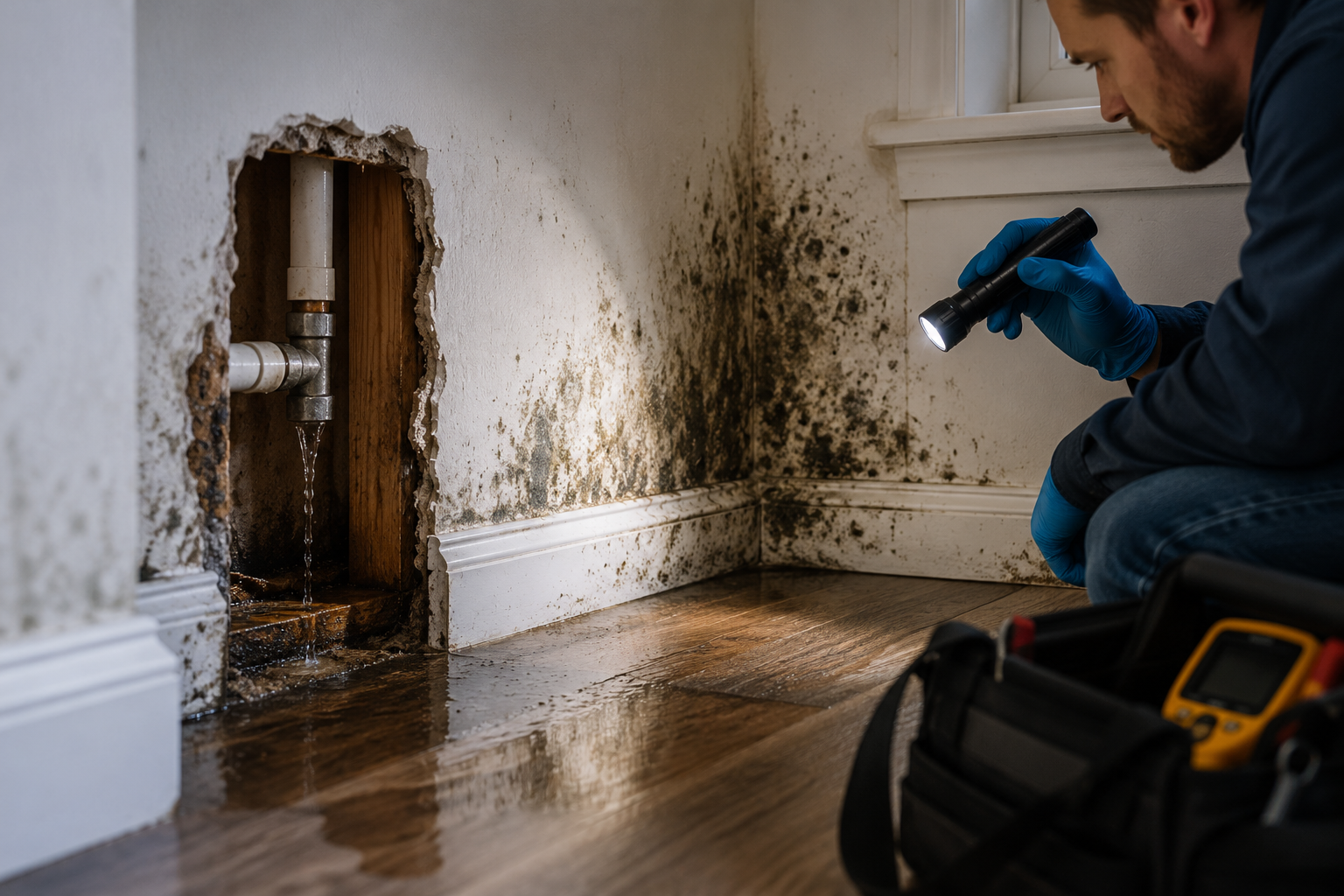

Many homeowners believe that a small water leak isn’t a serious concern. In reality, even a slow drip behind a wall, under flooring, or in the ceiling can create the perfect conditions for mold growth. Left untreated, a minor leak can turn into costly repairs and create unhealthy indoor air.
How Can a Small Leak Lead to Mold?
Mold needs only three things to grow:
- Moisture
- Organic materials such as drywall, wood, or insulation
- Time
Once moisture is present, mold can begin growing within 24 to 48 hours. Even if surfaces appear dry, hidden moisture may remain trapped inside building materials.
Common Sources of Small Leaks
Small leaks often come from:
- Plumbing pipes
- Roof damage
- Leaking windows
- Air conditioning systems
- Faulty appliances
- Water heaters
Even a slow leak that continues for several weeks can cause significant mold growth.
Warning Signs
You may need a professional inspection if you notice:
- A musty odor
- Water stains on walls or ceilings
- Peeling paint
- High indoor humidity
- Allergy or respiratory symptoms
Why You Shouldn’t Ignore a Small Leak
Mold spreads quickly and can damage drywall, flooring, insulation, and structural materials. It can also reduce indoor air quality and contribute to allergies, asthma, and respiratory irritation.
The sooner a leak is found and repaired, the easier and less expensive it is to prevent extensive mold damage.
How Professional Inspections Help
Professional inspectors use advanced equipment to:
- Detect hidden leaks
- Measure moisture levels
- Locate hidden mold
- Perform indoor air quality testing
- Assess water damage
Early detection helps prevent larger problems and protects both your home and your health.
Contact QCI Today
If you suspect even a small leak, don’t wait until mold becomes a major issue. QCI provides professional mold inspections, mold testing, leak detection, water damage evaluations, and indoor air quality testing throughout Southwest Florida.
📞 (239) 777-2875
Proudly Serving Southwest Florida